
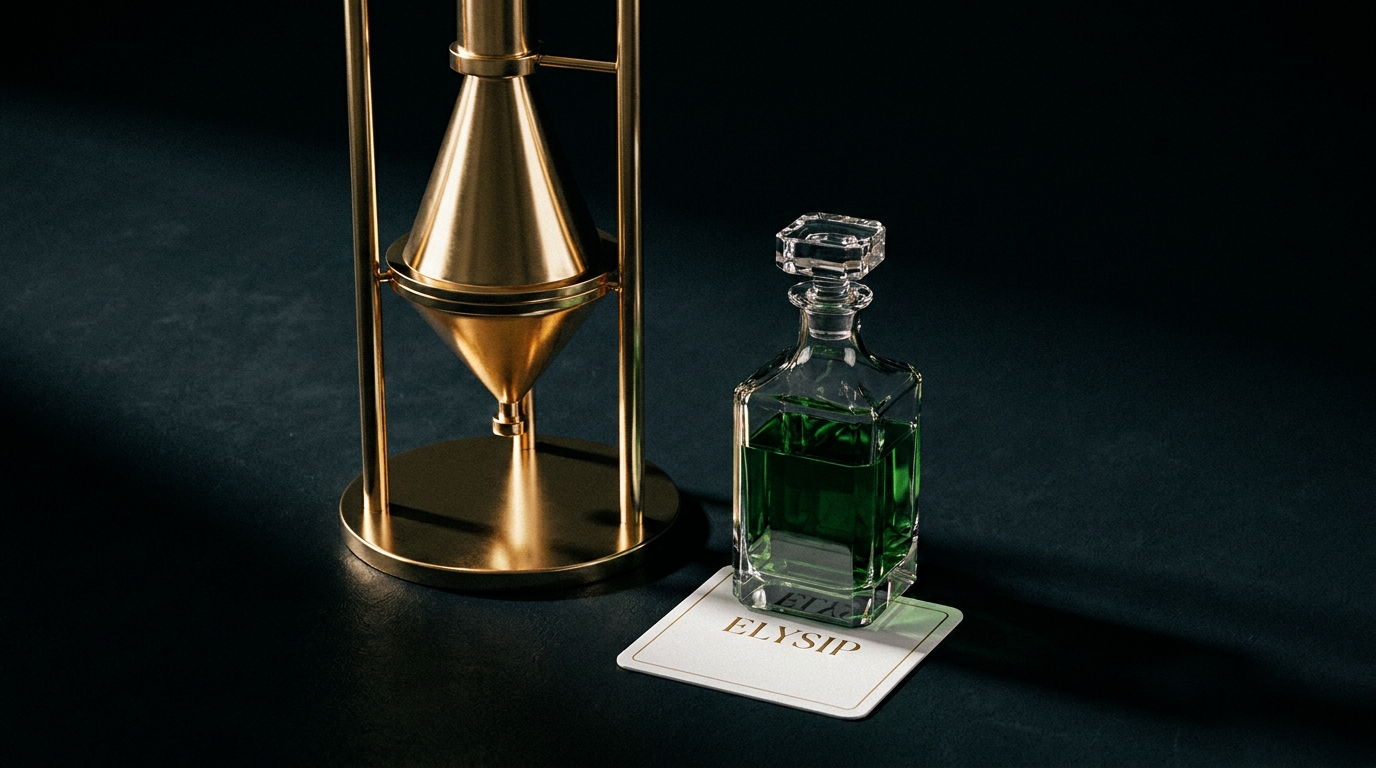
The Vacuum and the Cone: Preserving Liquid Art
How the spinning cone column utilizes low temperatures and vacuum pressure to preserve delicate green-herbal terpenes in premium No-Lo distillation.
At twenty-eight degrees Celsius, under a pressure so low it mimics the upper stratosphere, the liquid begins to part with its secrets. There is no violent boiling, no hiss of escaping steam, only a quiet, almost imperceptible tremor within the glass chamber. A scent of crushed pine needles, damp moss, and wild summer grasses begins to fill the pristine space, suspended in the cool air like morning mist over a Piedmontese valley. It is the aroma of green fields captured not by fire, but by stillness. The senses register this cold extraction as a quiet revelation — where the raw, unheated vitality of nature is coaxed into liquid form without losing its fragile soul.
The Science Behind It
Traditional distillation of spirits relies on intense heat — a process that invariably bruises and degrades the delicate volatile compounds that give plants their true character. The Spinning Cone Column (SCC) offers a fundamentally different approach. Operating at a precise temperature band of twenty-six to thirty-eight degrees Celsius and an ultra-low atmospheric pressure of 0.04 atmospheres, this system redefines the separation process entirely.
Inside the column, a series of alternating fixed and spinning cones transforms the liquid into a microscopic, highly turbulent film. This dramatic increase in surface area allows for the gentle liberation of volatile aromatics without thermal stress. The system operates on a meticulous strip-and-restore methodology. In the first phase, a gentle stream of inert gas strips the highly volatile top-note terpenes from the liquid matrix at low temperatures — these precious compounds are condensed and safeguarded. Next, the remaining liquid is processed to remove the alcohol, a separation that would typically destroy the sensory profile under conventional heat. Finally, the pristine, untouched aromatic fraction is reunited with the dealcoholized base. The final liquid retains the exact molecular architecture of the original botanicals — a sensory precision that traditional distillation methods simply cannot replicate.
The Ritual
To fully appreciate the molecular precision of a cold-distilled liquid, the ritual of consumption must be equally deliberate. Begin by selecting a heavy, tulip-shaped crystal glass, which naturally concentrates the delicate top notes. Pour fifty milliliters over a single, hand-carved block of ultra-clear ice. The ice must melt slowly, preventing premature dilution of the delicate structure. Avoid aggressive agitation — instead, allow the liquid to rest for sixty seconds, letting the ambient temperature gently coax the trapped volatiles into the air.
As you bring the glass to your lips, do not rush the sip. Let the cool vapor rise, delivering the initial wave of fresh pine and crushed herbs directly to your olfactory senses. When the liquid touches your palate, allow it to roll slowly toward the back of the mouth, where the subtle warmth of the tongue releases the deeper, woody undercurrents. This is not a drink to be rushed — it is a quiet dialogue between the science of extraction and the art of slow appreciation, best experienced in the quiet hours of l'aperitivo.
The Ingredient Spotlight
The green-herbal terpene profile characteristic of SCC distillation is dominated by three primary organic compounds: terpinolene, ocimene, and sabinene. Terpinolene, with its complex aroma of fresh pine, sweet wood, and subtle citrus undertones, provides the bright, vertical structure of the blend. It is a highly volatile compound easily destroyed by heat — making the low-temperature vacuum of the spinning cone column essential for its survival. Intertwined with this is ocimene, which introduces a wild, sweet herbal quality reminiscent of fresh basil and summer fields after heavy rain. Finally, sabinene adds a grounding, spicy-woody depth, anchoring the brighter top notes with its earthy, peppery undertones.
In traditional distillation, these three compounds would be lost or altered — turning bitter or flat under the stress of high temperatures. Through the cold SCC process, they remain perfectly intact, retaining their stereochemical integrity. The liquid in the glass mirrors the precise chemical signature of the living plant, offering a pure, unadulterated expression of the natural world.
In the pursuit of modern luxury, what we choose to preserve is as important as what we choose to remove. By mastering the delicate physics of the vacuum and the spinning cone, a rare balance becomes achievable — where science serves sensation, and the result is a liquid of profound clarity designed for those who appreciate the subtle, unspoken complexity of nature.