
The Language of Terpenes: Reading Premium No-Lo
Discover how to read the complex molecular profiles of high-end No-Lo distillates. An editorial guide to the five sensory terpene profiles of premium botanical spirits.
At exactly forty-two degrees Celsius, the delicate molecular architecture of a premium liquid begins its silent, upward migration. Before the glass even touches the lips, volatile compounds detach from the liquid matrix, filling the immediate atmosphere with an invisible, highly structured olfactory map. This is not mere scent — it is a complex chemical language spoken in the distinct dialect of terpenes. In the realm of high-end No-Lo distillates, these organic hydrocarbons are the primary architects of flavor, replacing the heavy, masking heat of traditional ethanol with a precise, microscopic choreography of alpine pine, damp earth, and sharp mountain air that lingers coolly on the palate, demanding a slower, more deliberate form of attention.
The Science Behind It
To read a sophisticated distillate is to understand how terpenes dictate the sensory arc of a drink. Unlike conventional spirits that rely on the broad-stroke extraction capabilities of high-proof alcohol, the curation of a premium No-Lo liquid requires a hyper-focused mastery of molecular physics. Terpenes — the aromatic hydrocarbons found within the essential oils of botanical specimens — behave differently depending on temperature, pressure, and their liquid environment.
The most rigorous producers isolate these volatile elements through low-temperature hydrodynamic cavitation, preserving the fragile structures that would otherwise perish under traditional thermal distillation. When introduced to a glass, these molecules sequence themselves hierarchically. The lighter monoterpenes, such as the citrus-forward limonene, escape first to form the top note of the bouquet. These are rapidly followed by the more resilient sesquiterpenes, which provide the deep, grounding base notes that anchor the mid-palate. By controlling this molecular release, serious distillers construct a temporal experience where flavor is not static, but rather unfolds sequentially over several minutes — an olfactory clock ticking through distinct sensory phases from the first pour to the final, lingering sip.
The Ritual
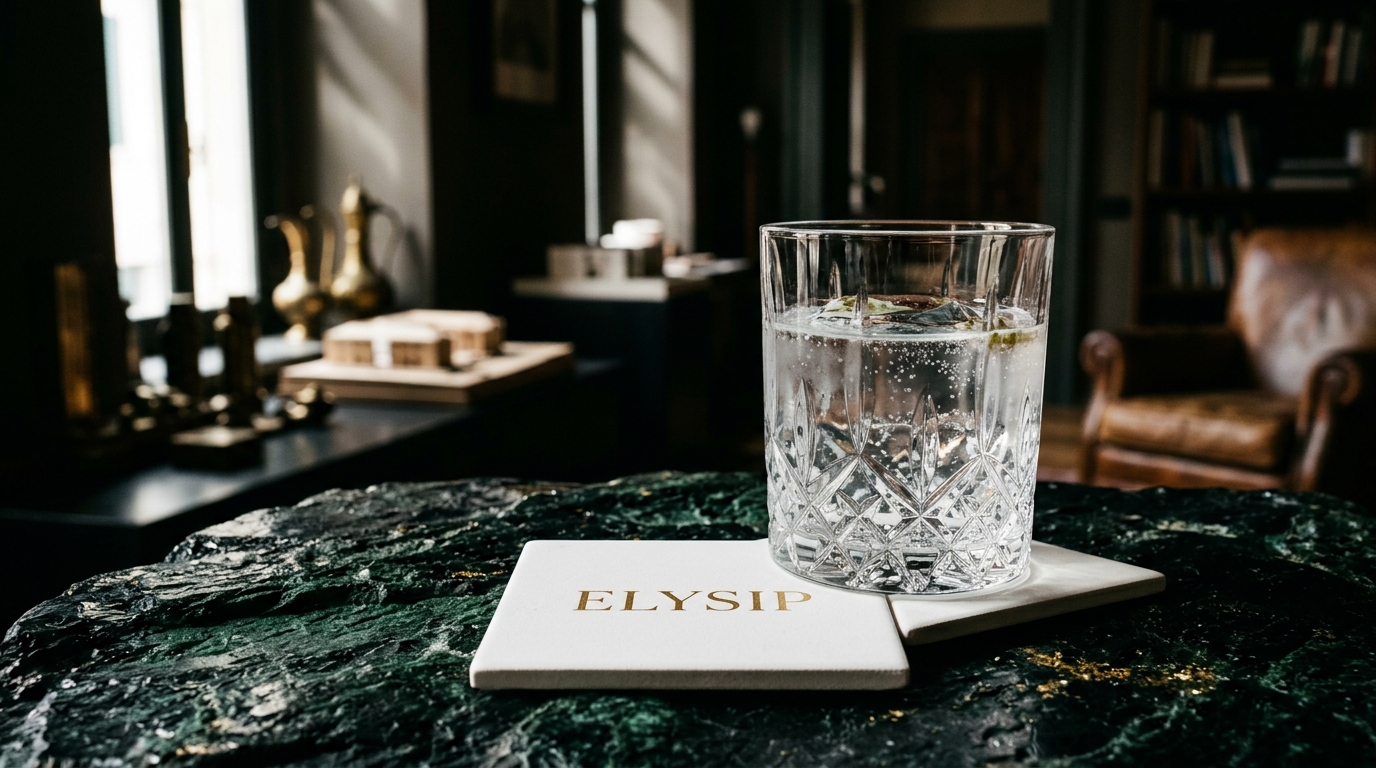
Appreciating this molecular choreography requires a deliberate, structured approach to serving. Begin with the selection of glassware. A tulip-shaped crystal glass is essential — its inward-tapering walls concentrate the rising volatile compounds, directing the terpene stream precisely toward the olfactory receptors. The liquid should be served at a disciplined temperature of twelve degrees Celsius — cool enough to maintain structural integrity, yet warm enough to allow the lighter hydrocarbons to vaporize.
Pour thirty milliliters slowly over a hand-carved block of dense ice, which melts at a glacial pace to prevent premature dilution. Avoid physical agitation; instead, allow the liquid to settle for thirty seconds. This brief pause permits the molecular layers to re-establish their hierarchy after the physical shock of the pour. Take a slow, passive inhalation before the first sip, letting the initial wave of terpinolene and ocimene register on the senses. When you finally taste, let the liquid coat the tongue entirely, noting how the structural architecture shifts from dry herbal sharpness to a warm, woody finish that reveals itself only after the liquid has departed.
The Ingredient Spotlight
The green-herbal terpene profile relies on a meticulous selection of botanical sources rich in specific terpene isomers. Terpinolene, sourced from wild-harvested pine needles and select herbaceous plants, delivers an intense, clear pine freshness that mimics the crisp atmosphere of a subalpine forest. This is balanced by ocimene — a delicate compound that introduces a sweet, almost wet-leaf herbal undertone, preventing the profile from becoming overly medicinal or harsh. Finally, sabinene provides a subtle, spicy, woody depth that grounds the brighter green notes.
Each of these components is selected not merely for its individual aroma, but for how it co-exists within the aqueous matrix of the distillate. Without the heavy hand of ethanol to force solubility, these compounds must be perfectly balanced to prevent any single note from dominating the palate. The result is a highly disciplined green-herbal profile that speaks of damp earth, crushed needles, and cold mountain stone — a pristine sensory landscape captured in a glass.
Ultimately, reading the language of terpenes is an exercise in presence. It challenges the drinker to move past the simple binary of alcohol and its absence, focusing instead on the complex, quiet beauty of molecular architecture. In this space, luxury is found not in excess, but in the precise, silent alignment of nature's finest elements. It is a quiet revolution in a glass.