
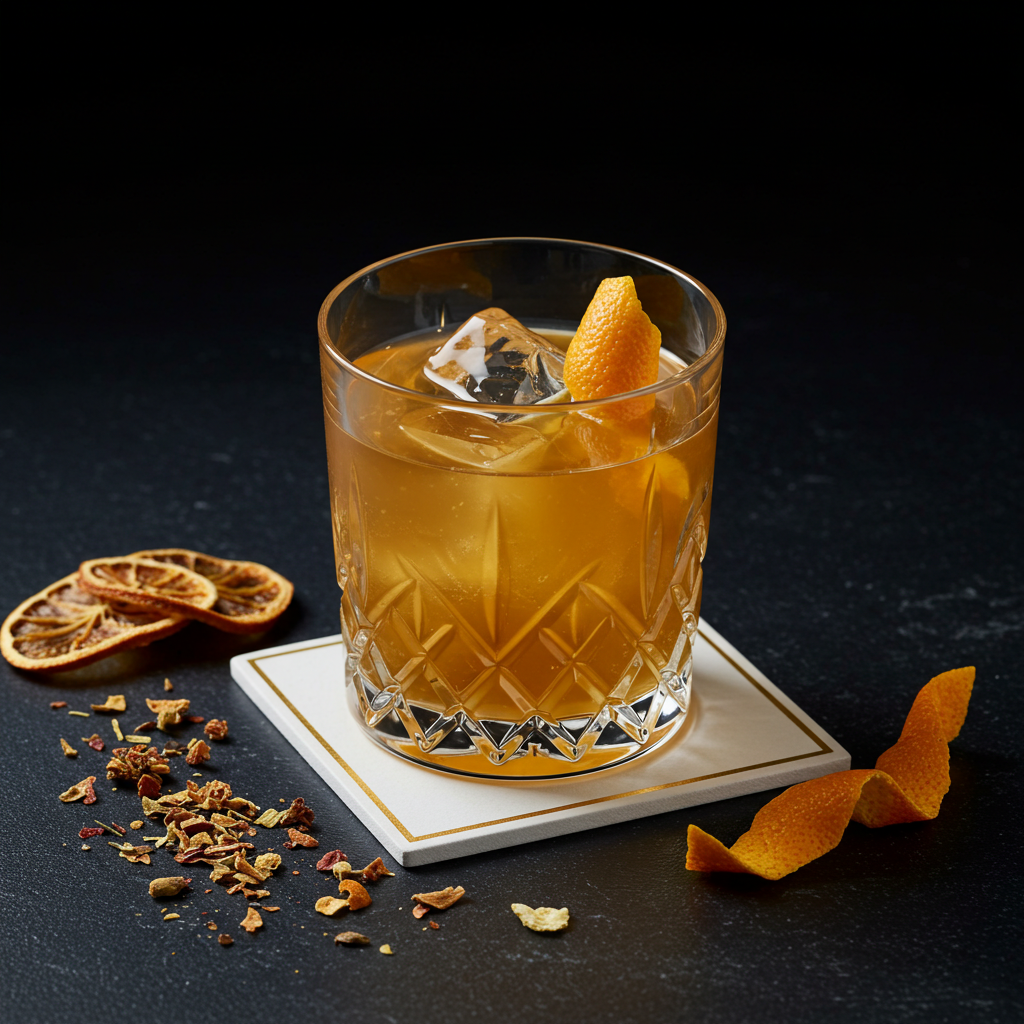
Rhodiola Rosea and Conscious Sociability: The New Aperitivo
Rhodiola rosea and the molecular case for the high-performance aperitivo: how the golden root of Siberian altitude became ELYSIP's social architect.
The aperitivo hour has always been about transition. From work to presence. From private to social. From the day you carried to the evening you choose. For most of the twentieth century, that transition was managed by alcohol — a blunt instrument that lowers inhibition by suppressing function. The no-lo movement has spent a decade proposing alternatives, most of them inadequate: grape juice dressed in dark glass, botanical waters with marketing budgets larger than their formulation budgets. Rhodiola rosea, the golden root cultivated at Siberian altitude, represents something categorically different — a botanical whose mechanism aligns with precisely what the aperitivo hour demands, and whose science survives scrutiny. This is the case for why it belongs in your glass at six o'clock.
The Golden Root: Molecular Profile
Rhodiola rosea contains two primary bioactive classes: rosavins — rosavin, rosin, rosarin — unique to this species and absent from other Rhodiola varieties, which matters because the market is full of cheaper substitutes mislabelled as equivalent; and salidroside, a tyrosol glucoside present across the genus. Together, these compounds modulate the stress-response axis through a mechanism distinct from ashwagandha's receptor binding. Rhodiola appears to act primarily on neurotransmitter transport, reducing the degradation of serotonin and dopamine during periods of acute cognitive load. What this means in plain terms: the compounds do not sedate, they stabilise. Researchers call it the anti-fatigue effect — maintained cognitive and social performance under pressure, without the pharmacological blunting that alcohol produces on the same timescale. The neurochemistry of being present rather than absent, in a glass.
Why Species Identity Matters
The rosavin marker is the key discriminator a serious buyer should check first. Rosavins — the compound trio that distinguishes Rhodiola rosea from its relatives — do not appear in other Rhodiola species. A product standardised to "Rhodiola extract" without rosavin disclosure is likely a cheaper root, possibly Rhodiola crenulata or a geographic hybrid, with a meaningfully different compound profile. The same principle applies here as with ashwagandha: the genus name on the label is not the guarantee. The standardisation data is. Minimum threshold for a functional aperitivo format that takes the botanical seriously: rosavins ≥3%, salidroside ≥1%, declared on the specification sheet, not buried in a proprietary blend. Anything less is taxonomy on a label, not formulation.
The Formulation Problem (and Its Solution)
Until recently, Rhodiola presented a practical barrier to serious beverage application: its rosin compounds are hydrophobic — poorly soluble in water, unstable under heat, prone to off-flavour at meaningful concentrations. The category workaround was to use trace amounts that looked good on a label and contributed nothing biochemically. The technical solution that changed this is cyclodextrin complexation — a process in which the active compounds are encapsulated in ring-shaped carbohydrate molecules (cyclodextrins), making them water-soluble, thermally stable, and colour-neutral without altering the compound profile. The resulting ingredient is shelf-stable, flavour-compatible with citrus and botanical formats, and standardised to the rosavin and salidroside levels that the clinical literature takes seriously. This is not a minor processing detail. It is the formulation breakthrough that made the serious functional aperitivo possible — and the reason a Rhodiola drink made five years ago and one made today are not the same product, regardless of what the label says about the root.
The Social Architecture
Where ashwagandha addresses the physiology of accumulated stress, Rhodiola addresses something more specific: the performance of social engagement under cognitive depletion. The anti-fatigue mechanism is particularly relevant at six in the evening — the moment when the cognitive reserves of the working day are at their lowest ebb, and social intelligence demands the most: reading a room, tracking a conversation, being genuinely present rather than physically attending. Most people reach for alcohol at exactly this moment, which resolves the fatigue temporarily by suppressing the signal rather than stabilising the system. The functional aperitivo proposition is different: support the neurotransmitter environment that social performance draws on, rather than anaesthetising the awareness that social engagement requires. The glass as preparation for the table, not escape from it.
Reading the Label: Three Checks
Before paying a premium for any Rhodiola-led aperitivo, apply the same scrutiny the ELYSIP Codex applies. First, species confirmation: the product should specify Rhodiola rosea, not simply "Rhodiola" — the distinction is molecular, not botanical pedantry. Second, rosavin standardisation: the percentage must be declared; ≥3% is the threshold below which the clinical literature does not demonstrate meaningful anti-fatigue effects. Third, solubilisation method: a premium Rhodiola ingredient in a water-based format will disclose the complexation or solubilisation technology used — because without it, the bioactive compounds are not meaningfully bioavailable in a cold, aqueous drink. Producers who answer these three questions in writing have built a product. Producers who respond with "adaptogen blend" have built a story.
The New Aperitivo Ritual
The sensory grammar of the aperitivo hour is not negotiable: bitter edge, aromatic lift, conversational momentum. A Rhodiola formulation that meets the Codex standard pairs best with a citrus-sharp terpene vehicle — limonene from lemon distillate, bergamot oil — where the root's neurotransmitter stabilisation aligns with the uplifting sensory signal of citrus terpenoids. The bitterness provides structure. The citrus provides the aromatic cue that the social transition has begun. The Rhodiola provides what the alcohol used to simulate and rarely delivered cleanly: the sense of arriving, rather than escaping. The aperitivo reimagined not as a lowering of guard but as a sharpening of presence. For the full Social Catalyst protocol — measures, sourcing specifications, and the extract criteria that pass the Codex — see the members' section.
The Verdict
Rhodiola rosea is among the most defensible adaptogen claims in the no-lo category — a meaningful mechanism, a distinguishable compound profile, and a solubilisation technology that finally makes serious formulation viable. The category has not caught up with the science: most Rhodiola drinks on the market either use the wrong species, the wrong standardisation, or no solubilisation technology — which means the compound is present on the label and absent in the bloodstream. The benchmark is clear: rosavins ≥3%, salidroside ≥1%, cyclodextrin or equivalent complexation, declared. Producers who publish those numbers are making a functional aperitivo. Everyone else is making a botanical soft drink with a sophisticated vocabulary. The difference is worth knowing before you pay for it.