How to Order Zero-Proof at the Bar Without Losing an Ounce of Cool
The way you order changes the drink you get. ELYSIP breaks down the ritual psychology behind ordering zero-proof at any bar, anywhere.
There is a specific kind of silence that follows the sentence "I'll just have a soda water, thanks." It lasts about two seconds. The bartender's hand, halfway to the shaker, drops back to the rail. The friend beside you glances over, just for a beat, before the conversation resumes. Nothing rude has happened. Nobody has said a word. But something has been registered — and the drink that arrives a moment later, more often than not, looks exactly like what you asked for: water, with bubbles, in a glass that seems to apologise for itself. After a decade of genuine progress on what goes into a non-alcoholic drink, the weakest link in the entire category is still the ten seconds it takes to order one.
The Order Is the First Move of the Ritual
Researchers who study ritual behaviour describe it as a fixed sequence of small, formal actions — a script — that signals to everyone involved, including yourself, what kind of moment is about to happen. A drinks order is one of those scripts. It has a rhythm: a style or spirit is named, a build is implied, a glass is half-chosen before a single word is spoken aloud. What this means at the bar is simple. The script starts with you, not with the bartender. Open with "just water" or "nothing for me, really, whatever's easiest," and you haven't removed alcohol from the moment — you've removed the moment itself, replacing it with a non-event. The bartender responds in kind, because you've told them, accurately, that this round doesn't need their attention.
This is also, quietly, why the question "are you not drinking tonight?" tends to follow a vague order more often than a specific one. A specific order closes a loop the room can register and move past. A vague one leaves the loop open, and someone, eventually, will ask about it.
Bartenders Build From Templates — Give Them One
Here is the part almost nobody explains, because it sounds almost too simple to be useful: most bars, even very good ones, do not have a dedicated zero-proof menu. What they have is a bartender who knows perhaps a dozen drink structures — a sour, a spritz, a stirred-and-strained, a tall highball, a Negroni-style build — by muscle memory, the way a chef knows a handful of mother sauces. Ask for "a Negroni, but without the alcohol," and you are not asking anyone to invent a new drink. You are handing them a template they can already execute with their eyes closed: equal-parts build, bitter, stirred over ice, a wide glass, orange peel expressed over the top at the end. Swap the gin and the Campari for a bittersweet botanical alternative and a splash of soda, and the drink that lands in front of you carries the same weight, the same choreography, as the one next to it. The only thing missing is the part nobody at the table was actually there for.
Compare that to "do you have anything without alcohol?" — a question with no shape at all. It places the entire burden of invention on someone who, on a busy evening, is already several tickets behind. Of course the answer defaults to soda water with a lime wedge. You haven't given them anything to build, so they haven't built anything.
Ordering Like You Mean It: Three Phrases That Work
None of these require the bar to stock a single specific bottle, and none of them depend on the venue having thought about this in advance. They work because they describe a structure, not an absence.
- "Could I get a [botanical spirit] and tonic — built properly, lots of ice, a real garnish?" This names an ingredient if the bar happens to stock one, but even without it, "built properly" tells the bartender you expect the full G&T treatment: a tall glass, full ice, a citrus or herb garnish expressed over the top before serving. You've ordered the ritual, not just the liquid in it.
- "Do you have something bittersweet you could build like a Negroni, without the alcohol?" This gives the bartender a category — bitter, stirred, low and slow — and a clear permission slip to improvise within it. Most reasonably stocked bars have at least one bitter, amaro-style or aperitivo-style alternative on the back bar, even when it never makes it onto the printed menu.
- "What's the best non-alcoholic pour you make — and could I have it served the way you'd serve the real thing?" This is the most open of the three, and often the most revealing. It asks the bartender to apply their own standards rather than their assumptions about what a non-drinker is supposed to want. The answer you get back tells you a great deal about the venue itself.
The ELYSIP Standard
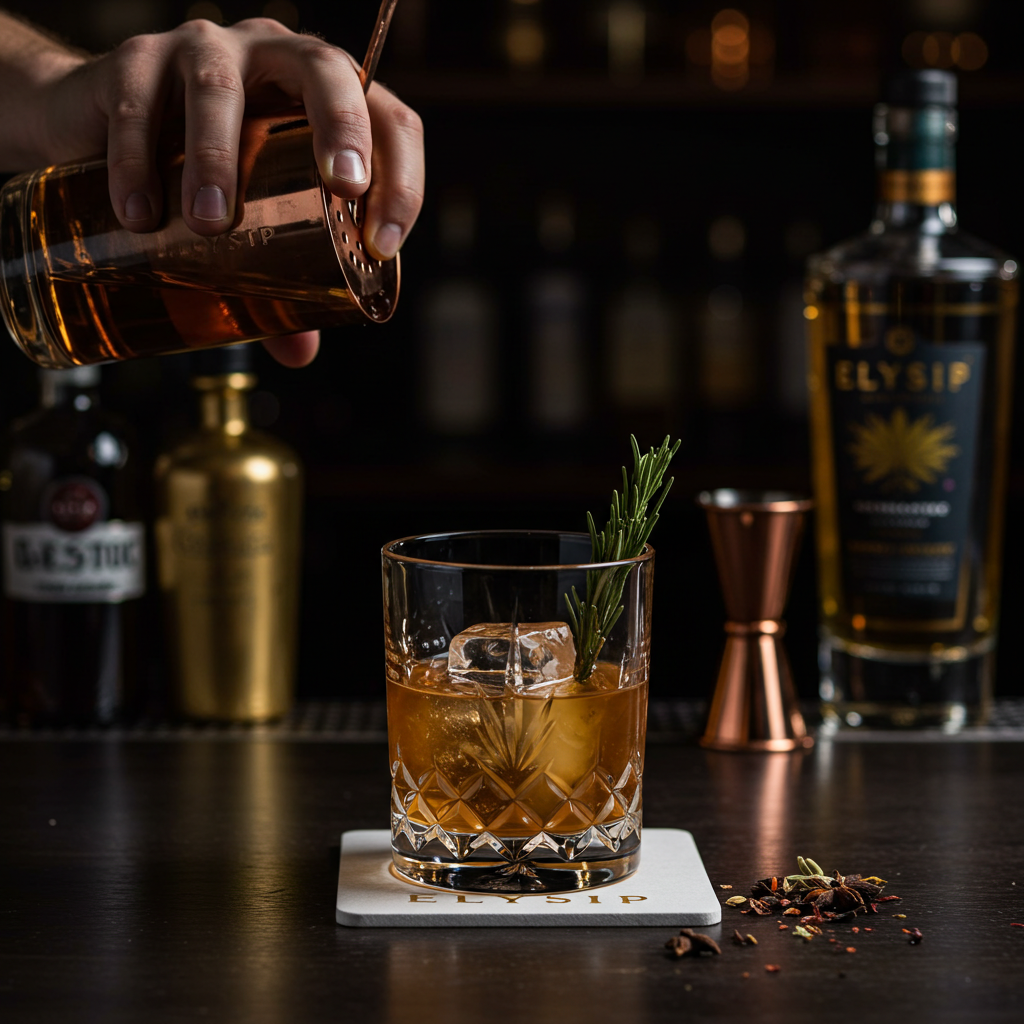
The benchmark ELYSIP applies when assessing a venue has very little to do with the length of its zero-proof list. Some of the best non-alcoholic drinks we've been served came from bars with no dedicated menu at all — built on request, on the spot, by a bartender who treated the order as a brief rather than an inconvenience. What we look for is whether the order gets treated as a build: the same glassware as its alcoholic counterpart, the same ice, the same garnish discipline, the same care in the pour. A venue that serves its non-alcoholic Negroni in a proper rocks glass with an expressed orange twist, at a price that reflects that care, has passed the only test that matters. A venue that hands over a half-filled tumbler of cranberry juice and soda water has not — whatever its menu happens to say.
The Verdict
Cool was never a property of the liquid. It is a property of the transaction — the confidence with which something is requested, and the care with which it is then delivered. Order with structure, and a bar with even moderately competent staff will rise to meet it, alcohol or not. Order with an apology, and you will, with depressing reliability, be served one. The good news is that the entire fix sits on your side of the bar, and it costs nothing: change the script, and the room changes its response to match it.
The full Botanical Dinner Protocol — course-by-course pairings, glassware, timing, and the Codex comparison of leading zero-proof producers — is available to ELYSIP members.