
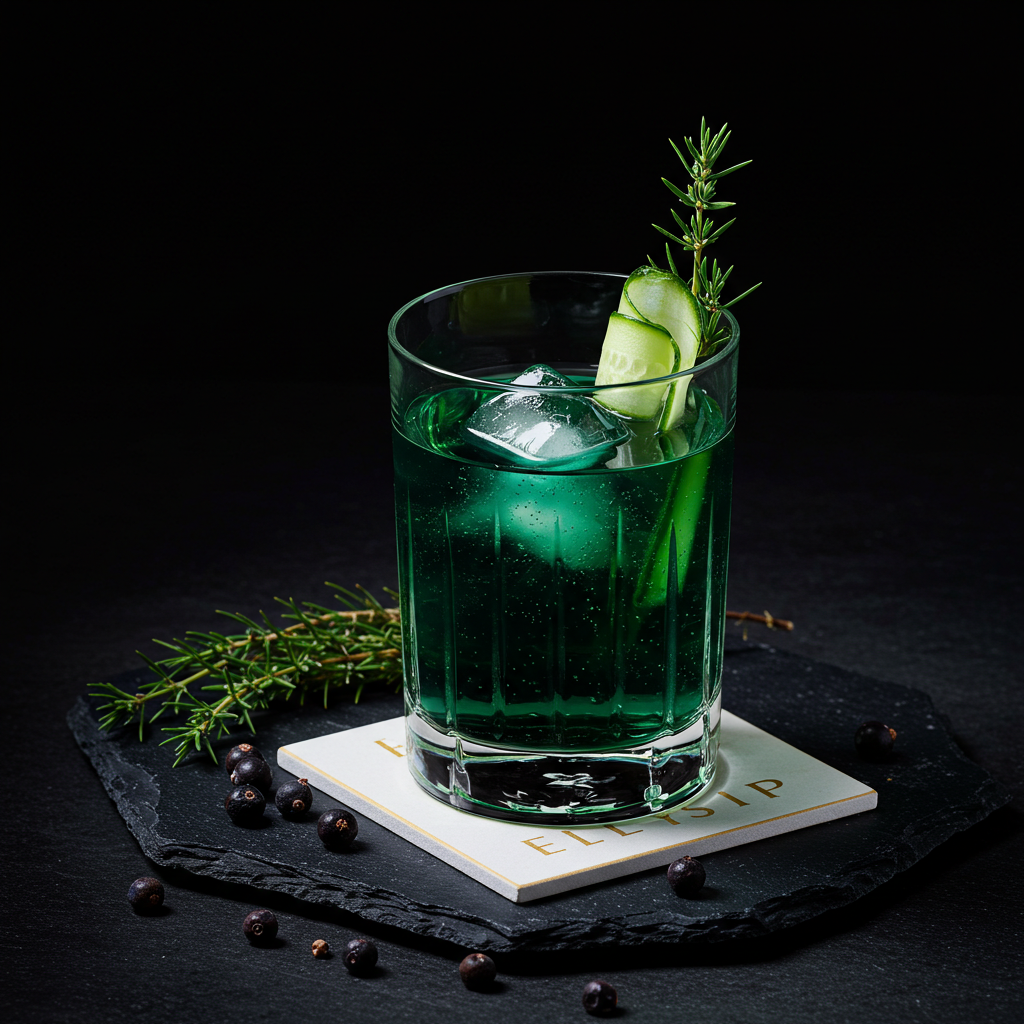
Focus Formula: The Cocktail for the High-Performance Aperitivo
The aperitivo for founders, directors and architects of culture: a precision-dosed functional cocktail engineered for the high-performance social moment.
There is a specific moment in the working day of high-performers — founders, partners, directors, architects of culture — that no beverage category has formally addressed. It occurs approximately ninety minutes after the last meaningful decision of the afternoon: the cognitive infrastructure of the day begins to deplete, the executive function that made the morning productive is running on reserve, and the evening's social demands are still ahead. The options on offer are not adequate to the moment. Alcohol softens the transition by suppressing the faculties the evening will require. Coffee extends the tension rather than resolving it. Water is not a ritual. ELYSIP's position is that this specific moment deserves a specific solution — an aperitivo engineered not to blur the shift from work to presence, but to sharpen it. This is the molecular and sensory case for the Focus Formula.
The Aperitivo Distinction
The Focus Formula is not a productivity drink. The distinction is not semantic — it is architectural. A productivity drink belongs to a desk: it optimises output, it extends the working state, it is instrumental. An aperitivo belongs to a table, a conversation, an evening that deserves to be fully inhabited. The Italian grammar of the aperitivo hour is transitional by definition: the drink that marks the end of one mode and the beginning of another. What the Focus Formula proposes is that this transition can be engineered with molecular precision rather than managed with ethanol — that the ritual can be both pleasurable and intelligent, that Lucid Hedonism and high performance are not competing values but the same value expressed in two registers. A drink that takes this seriously does not compromise on the sensory experience in order to include the functional compounds. It uses the terpene vehicle as both the aromatic architecture and the biochemical delivery system. That alignment is the formulation insight the Focus Formula is built on.
The Molecular Architecture
The formula combines two nootropic compounds with complementary timeframes — a design choice that addresses the specific dual demand of the post-work aperitivo moment: cognitive stabilisation for the social hours ahead, and an immediate sensory signal that the transition has begun. Bacopa monnieri at 150 mg, standardised to 55% bacosides, provides the longer-arc substrate: activation of choline acetyltransferase (increasing acetylcholine synthesis), cerebral blood flow enhancement via nitric oxide release, and antioxidant upregulation in hippocampal tissue. The clinical literature positions Bacopa as a compound that works cumulatively over weeks — but its inclusion in a single-serve formula is a declaration of philosophy, not an acute-effect claim. A brand that includes Bacopa at a declared, standardised dose is signalling a relationship with the drinker's cognitive environment, not just their evening. L-theanine at 100 mg provides the immediate layer: alpha brainwave induction via GABA modulation and glutamate inhibition, with onset at 30–60 minutes — the aperitivo window. Relaxed alertness, measurable in EEG studies, available within the session. The compound that does the immediate work while Bacopa builds the longer-term architecture.
The Terpene Amplification Layer
The terpene vehicle is β-pinene dominant, sourced from cold-distilled juniper. This is not a flavour decision that happens to include a functional ingredient — it is a single decision that serves both purposes simultaneously. β-pinene is an acetylcholinesterase inhibitor: it reduces the breakdown of acetylcholine, the neurotransmitter that Bacopa's cholinergic mechanism works to increase. The two compounds approach the same molecular target from different entry points — Bacopa by increasing synthesis, β-pinene by reducing degradation — producing a compounding effect at doses that would be sub-threshold individually. The terpene-adaptogen matrix, applied: the aromatic architecture of the drink and its biochemical architecture are the same decision. Cold-distilled juniper is the correct terpene vehicle for a Bacopa-forward formula because its dominant terpene amplifies Bacopa's primary pathway. This is what ELYSIP means by molecular precision in a glass.
Sensory Architecture
The flavour profile is green-herbal and precise — the sensory equivalent of the cognitive state the formula is designed to support: clear, structured, without unnecessary weight. Seedlip Garden 108 as botanical framework, cold-pressed cucumber for brightness and chlorophyll lift, juniper distillate as the β-pinene vector, fine-bubble sparkling water to carry the aromatic compounds. Colour: deep emerald. Vessel: premium highball, hand-carved rectangular ice block that maintains dilution control over the aperitivo window. Garnish: cucumber ribbon inside the glass, fresh juniper sprig at the rim. The visual grammar communicates the formula before the first sip: this is a drink that has been thought about, which is the correct signal for a drinker who wants to understand what they are consuming.
Reading the Label: What to Demand
The Focus Formula establishes a benchmark against which any Bacopa or L-theanine-forward functional aperitivo can be evaluated. Three checks the Codex applies: first, declared doses — both compounds must list milligrams per serving, not hide behind a "nootropic blend" designation; Bacopa below 150 mg at 55% bacosides standardisation and L-theanine below 100 mg are sub-threshold for the mechanisms claimed. Second, terpene source specification — the juniper distillate should declare its β-pinene content or at minimum specify cold-distillation, which preserves the terpene fraction that makes the amplification argument possible; a "natural juniper flavour" is not the same ingredient. Third, no conflation of timeframes — a brand that claims Bacopa produces focus tonight is making a claim the literature does not support; the honest framing is systemic, cumulative, and architectural. Brands that get all three right are building a functional aperitivo. Brands that get one or none are selling a premium soft drink with an interesting ingredient list.
The ELYSIP Standard
The luxury benchmark here is not Kin Euphorics or Three Spirit — brands that have done useful category-building work but operate within a wellness vocabulary that ELYSIP does not share. The reference points are the single malt for the person who understands distillation science, and the natural wine for the person who reads the producer's notes before choosing the bottle. Both assume that the consumer's understanding is a feature to be rewarded, not a complexity to be managed. The Focus Formula operates on the same assumption: a declared formula, a verifiable molecular logic, a terpene-adaptogen architecture that can be interrogated and confirmed. Not "functional" as a mood-board claim. Functional as a specification. The full Focus Formula protocol — exact measures, sourcing standards for each compound, and the extract criteria that qualify for the Codex — is available to ELYSIP members.
The Verdict
The Focus Formula addresses a real and unmet demand: the cognitive transition from high-performance work to high-quality presence, managed with botanical precision rather than ethanol. The molecular architecture is defensible — two compounds with complementary timeframes, a terpene vehicle selected for mechanistic compatibility, declared doses in clinically relevant ranges. The sensory architecture matches the formula's intention: green-herbal, precise, structurally complete. The luxury proposition is transparency itself — a drink whose logic can be read as fluently as its flavour. For the drinker who has graduated from "something interesting in a nice glass" to "something that earns its price with its specification," the Focus Formula is the aperitivo the working day has been missing.